
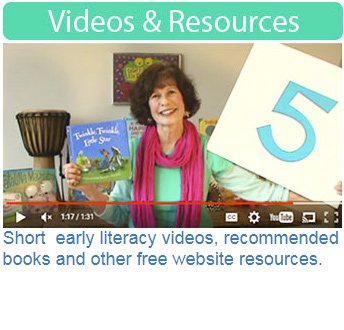
Short, practical videos about singing and early literacy
This is not a general media gallery. It is a focused teaching library: an introduction to the project, an overview of the five practices of early literacy, and a short set of skill-specific videos that help adults understand why singing matters.
Early-Literacy Video Lessons
Start with the big-picture orientation videos, then move into the six skill lessons. Each card opens a short lesson page directly.
Sing With Our Kids Introduction
An overview of the project and the community idea behind it: songs, books, and literacy support are strongest when families, schools, libraries, and local organizations reinforce each other.
Overview5 Practices of Early Literacy
A short overview that helps adults see how singing fits into a larger early-literacy routine alongside the other everyday practices children need.
6 Early Literacy Skills Introduction
A bridge video that introduces the six skill areas the rest of the short lessons cover one by one.
Skill LessonVocabulary
How songs and repeated language build word knowledge, memory, and the confidence children need to use new words.
Skill LessonPrint Motivation
A short lesson on helping children want to return to books, songs, and language experiences again and again.
Skill LessonLetter Knowledge
An introduction to helping children notice letters, name them, and connect songs to visible print and alphabet play.
Skill LessonPrint Awareness
Ideas for helping children notice that print carries meaning and can be followed from page to page and song to song.
Skill LessonNarrative Skills
How singing, retelling, and repeated refrains help children understand sequence, story shape, and expressive language.
Skill LessonPhonological Awareness
A short video about rhyme, rhythm, sound play, and the listening skills that singing makes especially visible.